Current Scholars

2025-2026 ARCS Minnesota Current Scholars

2025-2026 ARCS Minnesota Current Scholars

The Minnesota Chapter of ARCS Foundation supports scholars from the University of Minnesota. All are selected by their respective departments and meet ARCS Foundation’s high standards of academic excellence.

ARCS Foundation Scholar Awards are presented each fall, and provide Scholars with $5,000 per year, for two years.


2024-2025 Minnesota Scholars

Introducing the ARCS Foundation MN Chapter Scholars
Our current Scholars span six different departments at the University of Minnesota: Biochemistry, Molecular Biology, and Biophysics (BMBB); Biomedical Engineering (BME); Mechanical Engineering, Civil (Mech E); Civil, Environmental, and Geo-Engineering (CEGE); Computer Science & Engineering (CSE); Neuroscience; and Immunology.
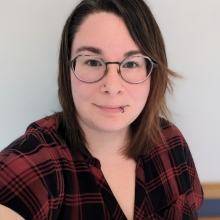
Ash Milton

My current research interests are focused on understanding the experiences and needs of users when navigating social media and search engines. I focus on marginalized people and communities, mainly mental health and LGBTQIA+ identities. By  recognizing the needs and struggles with technology of marginalized people and communities, I suggest and design changes to current social media and search engines to better support marginalized individuals. 

People with mental illness or LGBTQIA+ identities turn to the internet as a primary source of information and support but often face barriers when interacting with social media and search engines. Thus, by investigating and designing how people use these technologies, the lives of marginalized people can be improved. Supporting marginalized people perpetuates a virtuous cycle of equity that positively affects society.

I expect to use my award to support my research by covering some of the expenses that occur in completing the PhD program at UMN.

My career objectives are to continue doing research that supports marginalized individuals through a faculty position at a research university. I believe that it is important to not only continue my own research but also mentor students to be researchers who tackle important issues.

I like to read and play video games when I am not working on research. I also used to be a cake decorator and still like to bake and decorate cakes for friends' birthdays. My family lives on the West Coast, which is where I grew up. I am the oldest of 5 siblings, with 3 little sisters and a little brother.
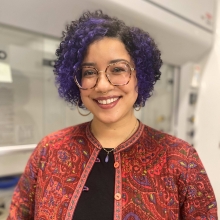
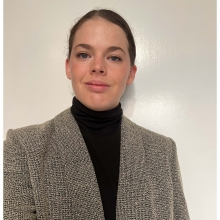
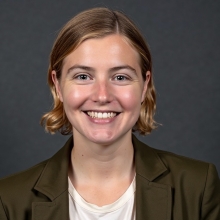
Nicole Quintus

It has been previously shown that the opioid system plays a role in depressive behaviors but the reason why this is the case is still poorly understood. Additionally, direct activation of opioid receptors via classic opioids such as fentanyl or heroine results in adverse behaviors such as opioid use disorder.

The Rothwell laboratory previously discovered a novel mechanism to indirectly modulate opioid signaling, avoiding the development of drug-seeking behaviors. My thesis project uses social defeat stress, a mouse model of depressive-like behavior, to explore how indirect activation of the opioid system contributes to differential gene expression within the brain, as well as anhedonia and social avoidance behaviors in mice.

My work has the potential to contribute to breakthroughs in treating neuropsychiatric conditions such as major depressive disorder. For many individuals living with major depressive disorder, current treatments are ineffective in helping them achieve full remission from their symptoms. By exploring novel ways to treat depression, my research can help individuals living with treatment resistant depression.

The support from this award will help alleviate the financial stress that arises from a limited graduate stipend. It will allow me to upgrade the technology I use to complete my research (laptop, computer monitor, etc) and cover the cost of my basic life necessities, overall improving my quality of life so I can focus entirely on my research project.

My career objective is to lead my own research team in exploring the molecular etiology of depression. Ultimately, I will combine my passions for neuropsychiatric research, equity, and inclusion to create positive outcomes for marginalized communities most impacted by mental illness.

During my time outside of the lab, I am a sewist and music enthusiast. My most current sewing project is a baby blanket for my niece, but I tend to sew clothes most of the time. My favorite garment is a floral print dress I made for myself last spring.
I have played several instruments since grade school and initially pursued a degree in music education before ultimately deciding on neuroscience. Though my career path pivoted, live music has remained an integral part of my life. I met my husband after a concert in Tempe, Arizona and we have been each other’s concert buddy ever since. I also enjoy spending time at home with my husband in our garden.

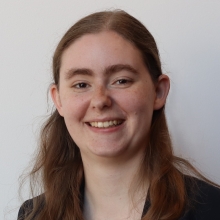
Makaha Harmon Headshot
Makaha Harmon

I aim to develop advanced methods that enhance the delivery of neuromodulation therapies while exploring the biophysical and physiological mechanisms that underlie their effectiveness. By refining how therapeutic stimulations are delivered, we can improve our understanding of their impact on neural circuitry and better tailor treatments for neuropsychiatric conditions. My research will likely involve computational techniques and the analysis of functional connectivity to identify how different regions of the brain interact during stimulation. Ultimately, I hope to contribute to the field of closed-loop, non-invasive neuromodulation, which has the potential to revolutionize therapeutic outcomes by enabling real-time monitoring and adjustment of neural stimulation parameters.

The primary benefit of my studies will be to advance our understanding of brain function and dysfunction, ultimately leading to more effective and personalized therapies for individuals with neurological and psychiatric disorders. By developing new methods of precision neuromodulation, my research will help lead to treatments that are tailored to the specific needs of each patient. These innovations could lead to therapies that are not only more effective but also less invasive, improving both the quality of life and long-term outcomes for patients. Additionally, my work will contribute to the scientific understanding of how brain circuits interact, helping to inform future therapeutic strategies for a wide range of conditions.


This award will significantly support my professional development by enabling me to attend leading conferences in the field of brain stimulation and neuromodulation. These will be invaluable opportunities for me to engage with cutting-edge research, network with leading experts, and share my own findings. I also plan to participate in workshops and specialized training sessions that will enhance my technical skills in neuromodulation techniques and data analysis.

My career objectives are deeply rooted in my desire to serve the veteran community, particularly those enduring neuropsychiatric disorders linked to military sexual trauma and domestic abuse. I aim to develop precision neuromodulation therapies that are tailored to the unique neural dynamics of each patient, reducing both the duration of treatment and the risk of adverse side effects. As a veteran myself, I am committed to giving back to this community by advocating for the experiences of women who have served and ensuring they receive the care they deserve. I plan to pursue a career in academia, where I can establish a research lab that collaborates closely with the Veterans Health Administration to advance treatment options for veterans.

When I am away from my research, I enjoy hiking with my dog, Ernest, and exploring the city of Minneapolis along with the beautiful natural landscapes that surround it. I also love taking road trips home to visit my family in Michigan. Being close to home allows me to share my graduate school experiences with my parents, who did not have the opportunity to attend college, and to conduct science experiments with my nephews, exposing them to the excitement of discovery.