2025-2026 Minnesota Scholars
2025-2026 Minnesota Scholars
Introducing the ARCS Foundation MN Chapter Scholars
Our current Scholars span six different departments at the University of Minnesota: Biochemistry, Molecular Biology, and Biophysics (BMBB); Biomedical Engineering (BME); Mechanical Engineering, Civil (Mech E); Civil, Environmental, and Geo-Engineering (CEGE); Computer Science & Engineering (CSE); Neuroscience; and Immunology.
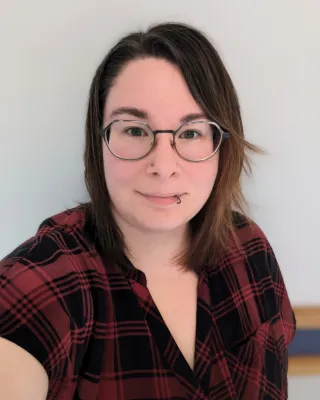
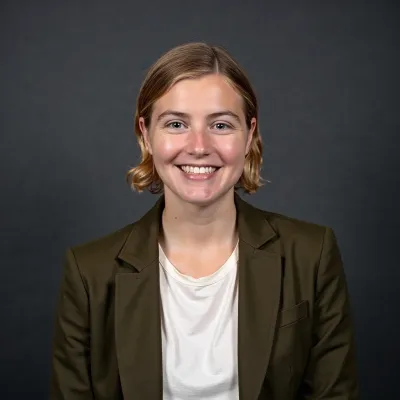
Ash Milton - Computer Science
Research Focus
I study how people with mental illness or LGBTQIA+ identities use social media and search engines — and where these platforms fall short. Many turn to the internet for information and support but hit unnecessary barriers along the way. My work identifies these pain points and designs practical fixes to make these technologies more inclusive, benefiting individuals and society alike.
How This Award Helps
It will help cover costs of completing my PhD at the University of Minnesota.
Looking Ahead
I hope to become a research university professor, continuing this work while mentoring future researchers.
Outside the Lab
I enjoy reading, video games, and baking — I'm a former cake decorator who still bakes for friends' birthdays. I grew up on the West Coast, where my family still lives, as the oldest of five siblings.
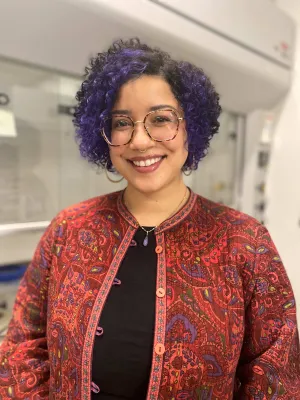
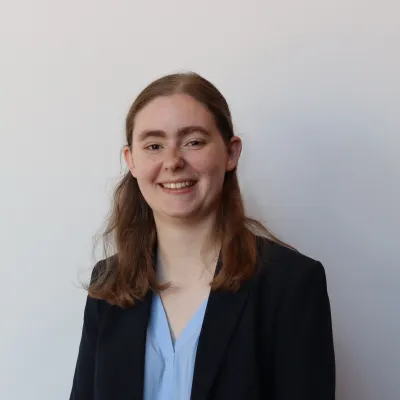
Nicole Quintus - Neuroscience
Research Focus
The brain's opioid system — the same system involved in painkillers like fentanyl — appears to play a role in depression, but scientists don't yet know exactly how. Directly targeting these opioid receptors with drugs can cause serious harm, including addiction. My lab recently found a way to influence this system indirectly, without triggering the drug-seeking effects. My thesis uses a mouse model to study how this indirect pathway changes gene activity in the brain and contributes to depression-like symptoms, such as loss of pleasure and social withdrawal. This research could pave the way for new depression treatments, especially for people who haven't been helped by existing options.
How This Award Helps
This award will ease the financial pressure of grad school, letting me upgrade essential lab equipment and cover living expenses so I can focus fully on my research.
Looking Ahead
My long-term goal is to lead a research team studying the molecular roots of depression, while championing equity and inclusion to improve mental health outcomes for underserved communities.
Outside the Lab
I'm a lifelong musician and concert-goer — I actually met my husband at a show in Tempe, Arizona. When we're not at a concert, we're tending our garden at home. I also love to sew; I make my own clothes (a floral dress from last spring is a favorite) and I'm currently sewing a baby blanket for my niece.
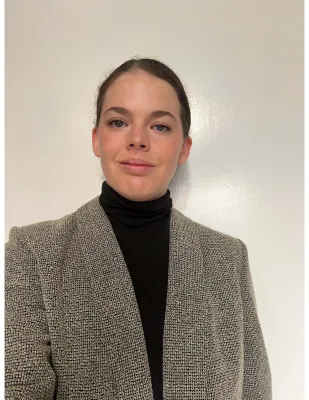
Makaha Harmon - Biomedical Engineering
Research Focus
I develop new ways to deliver non-invasive brain stimulation therapies and to better understand how they affect the brain. Using computational tools, I study how different brain regions respond to stimulation in real time. My goal is to advance "closed-loop" neuromodulation — stimulation that adjusts itself automatically and personally to each patient — which could transform treatment for neuropsychiatric conditions. This work aims to make brain stimulation more precise and patient-specific, improving outcomes and quality of life for people with neurological and psychiatric disorders.
How This Award Helps
This award will support my growth as a scientist by letting me attend major brain-stimulation conferences, connect with experts, share my research, and build new skills through workshops and specialized training.
Looking Ahead
As a veteran myself, my long-term goal is to serve the veteran community — especially those coping with neuropsychiatric conditions related to military sexual trauma and domestic abuse. I'm committed to developing tailored neuromodulation treatments and partnering with the Veterans Health Administration through future research.
Outside the Lab
I love hiking with my dog, Ernest, exploring Minneapolis, and road-tripping to visit family in Michigan. Sharing my grad school journey with my parents and doing science experiments with my nephews are some of my greatest joys.
Abby Matheney - Civil, Environmental, and Geo Engineering
Research Focus
If you've ever walked around a Minnesota lake in the summer and noticed bright green mats floating on the surface, you've seen what inspires my research. These algal blooms, caused by fast-growing cyanobacteria, can release toxins harmful to wildlife and humans. Ironically, cyanobacteria also helped make our planet habitable by producing oxygen billions of years ago — but today, their overgrowth signals real changes in our freshwater ecosystems. My research looks at how rising temperatures and nutrient runoff are fueling harmful algal blooms, and how this shifts the chemistry of lakes and the organic matter that supports aquatic food webs. Understanding these changes can help guide better decisions for protecting our lakes and the communities that depend on them.
How This Award Helps
The ARCS Scholar Award allows me to continue this work, with a focus on how climate change may affect the persistence of algal toxins in Minnesota lakes. It also lets me share my findings at conferences and collaborate with other scientists working toward safer, cleaner water.
Looking Ahead
My long-term goal is to become a professor and lead my own research team dedicated to science-based solutions for water quality.
Outside the Lab
I stay active through swimming, long-distance running, and winter skiing. I also love experimenting with vegetarian cooking, reading, and playing the piano. Growing up as the middle child in a close-knit family taught me how to balance independence with collaboration — skills that serve me well both in and out of the lab.
Mari Reid - Biochemistry, Molecular Biology, Biophysics
Research Focus
My research looks at how different parts of a cell communicate with each other. Organelles like mitochondria (which make energy), the ER (which makes proteins), and lipid droplets (which store fat) don't work alone — they exchange chemical signals to keep the cell healthy. We know lipid droplets interact closely with mitochondria and the ER, but we still don't fully understand how they "talk" to each other. I'm working to figure out what messages lipid droplets send and how nearby organelles interpret them, studying these interactions in liver cells, where this communication is essential for healthy fat metabolism. In fatty liver disease, that communication breaks down. By understanding how organelles cooperate in healthy cells, we hope to restore that communication in diseased cells and improve liver function — work that could help the nearly one-third of adults affected by fatty liver disease, and may also shed light on diseases like Alzheimer's and Parkinson's, where organelle communication is similarly disrupted.
How This Award Helps
The ARCS Scholar Award will help me access advanced microscopes, visit collaborators to learn new techniques, and attend conferences to share my research and learn from others.
Looking Ahead
My long-term goal is to become a professor at a primarily undergraduate institution, where I can focus on teaching and mentoring while running a small research lab that gives students hands-on experience.
Outside the Lab
I love reading fantasy, sci-fi, and mystery books, and I've played the clarinet for about fifteen years. As a Minnesota native, I'm grateful to have my family and close friends nearby — they've been an incredible support throughout grad school.
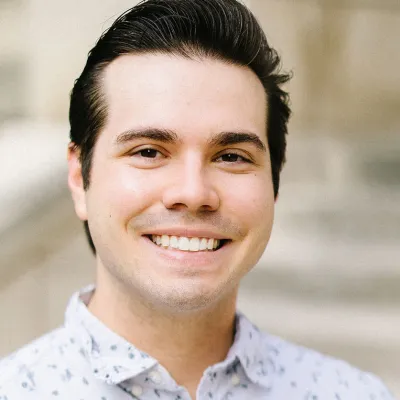
Trevor Tankersley - Immunology
Research Focus
Our immune system protects us from infections and cancer through two main parts: innate and adaptive immunity. My research focuses on CD8+ T cells, a type of adaptive immune cell that kills infected or cancerous cells. Within this group, I study a powerful subset called Long-Lived Effector Cells (LLECs), which are especially effective at clearing infections. I'm investigating how these cells develop, what makes them so strong, and how they use receptors typically found on innate immune cells to enhance their function. To make our findings more relevant to humans, we use a "dirty mouse" model that better reflects the immune experience of adult humans — an approach that could improve the development of vaccines and immunotherapies targeting infections and cancer.
How This Award Helps
The ARCS Scholar Award will help me attend scientific conferences and access specialized tools for my research.
Looking Ahead
After earning my PhD, I plan to continue studying CD8+ T cell biology as a postdoctoral researcher and apply my findings to new treatments for cancer and chronic disease.
Outside the Lab
I'm originally from Phoenix, Arizona. I enjoy baking (especially tarts!), playing video games, walking around Minnesota's lakes, and spending time with my two black cats, Salem and Moira.